The Transformative Advantages of Sodium Hypochlorite Generators in Urban Water Treatment Plants
1. What is a Sodium Hypochlorite Generator?
A Sodium Hypochlorite Generator (NaOCl Generator) is an on-site electrochemical system designed to produce a sodium hypochlorite solution through the electrolysis of a brine solution (typically sodium chloride dissolved in water). This process involves passing an electric current through the brine, resulting in the formation of hypochlorous acid (HOCl) and sodium hydroxide (NaOH), which combine to form sodium hypochlorite (NaOCl). Unlike traditional methods that rely on the delivery and storage of bulk liquid bleach or chlorine gas, these generators enable water treatment facilities to produce disinfectant on-demand at the point of use.
2. Why Use a Sodium Hypochlorite Generator Instead of Other Solutions?
Urban water treatment plants face significant challenges in ensuring consistent, safe, and cost-effective disinfection. Traditional alternatives present inherent drawbacks:
- Chlorine Gas (Cl₂): While potent, chlorine gas is highly toxic and hazardous to handle, store, and transport. It requires stringent safety protocols, specialized infrastructure (e.g., gas scrubbers), and poses significant environmental and community risks in case of leaks. Regulatory pressures on gas use are increasing.
- Bulk Liquid Bleach (Purchased NaOCl): Delivered sodium hypochlorite degrades over time, losing potency (especially in warmer conditions and with exposure to light or metals). This necessitates frequent deliveries, large storage tanks, and complex inventory management. Degradation leads to inconsistent dosing, potential formation of harmful chlorate by-products, and higher overall chemical costs due to the need for over-dosing to compensate for decay.
- Other Chemical Alternatives (e.g., Chloramines, Ozone, UV): While effective in specific scenarios, these often require complex systems, higher capital costs, may form different types of disinfection by-products (DBPs), or lack a persistent residual in the distribution system crucial for preventing microbial regrowth.
S eliminating the hazards associated with gas, avoiding degradation issues of purchased bleach (producing fresh, high-strength solution as needed), and providing a reliable, persistent disinfectant residual. They represent a shift towards safer, more sustainable, and controllable disinfection.
3. How to Choose the Appropriate Model of Sodium Hypochlorite Generator
Selecting the optimal generator requires careful consideration of several key plant-specific factors:
- Required Daily Chlorine Production Capacity: This is paramount. Determine the peak and average chlorine demand (in kg or lbs of Cl₂ equivalent per day) based on flow rates, required CT values (Concentration x Time), and target residual levels for both water and potentially wastewater applications.
- Salt Source and Quality: Assess the availability and purity of salt (NaCl). High-purity salt is recommended to minimize electrode scaling and maintenance frequency. Consider storage and feed systems for the brine solution.
- Available Power Supply: Verify the electrical requirements (voltage, phase, amperage) of potential generators match the plant's infrastructure.
- Space Constraints: Evaluate the footprint required for the generator skid, salt saturator, associated tanks, and dosing pumps.
- Automation and Control Integration: control, remote monitoring via SCADA, automated salt feed, dilution control) and its compatibility with existing plant control systems.
- Dilution Water Quality: Understand the quality of the water used to dilute the concentrated hypochlorite produced (e.g., hardness, iron content) as this can impact scaling potential and solution stability.
- Manufacturer Support and Service: Consider the reputation of the supplier for equipment reliability, technical support, spare parts availability, and local service capabilities.
Consulting with experienced engineers and reputable manufacturers is crucial to perform a detailed assessment and ensure the selected model meets current and future operational needs efficiently.
4. Advantages of HCZHUN Brand Sodium Hypochlorite Generators
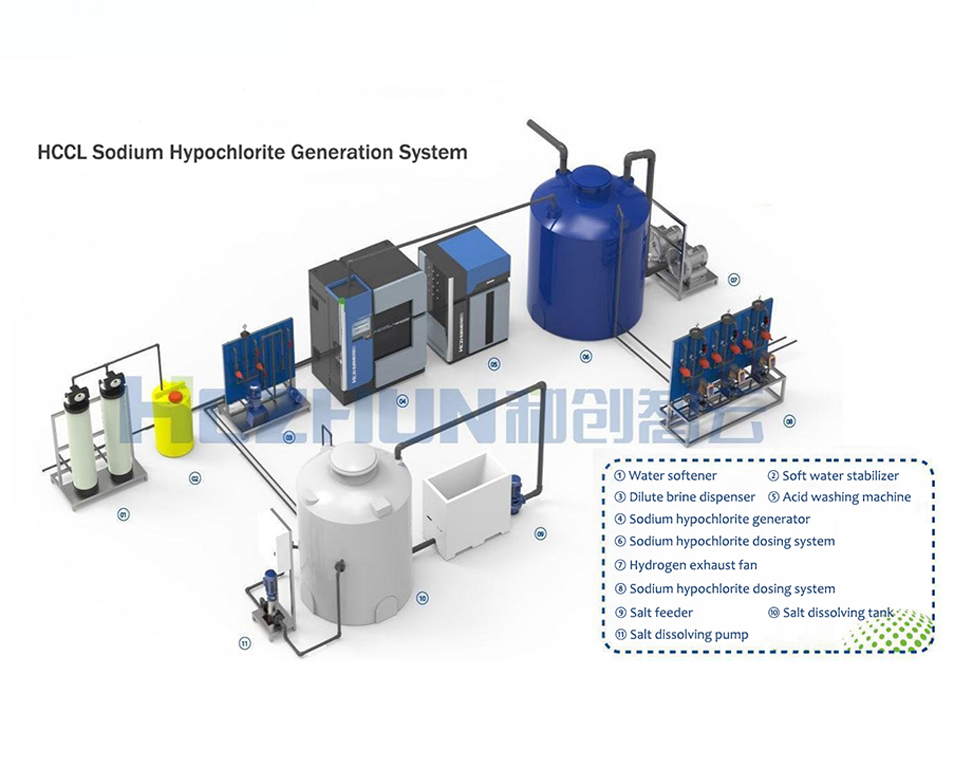
HCZHUN has established itself as a leader in on-site sodium hypochlorite generation technology, offering systems specifically engineered for the rigorous demands of municipal water treatment. Key advantages include:
- Superior Cell Technology: Utilizing advanced electrode coatings and optimized cell designs, HCZHUN generators achieve high current efficiency and extended electrode life, minimizing power consumption and reducing long-term operating costs. Our cells are designed for robust performance even with varying water quality.
- Enhanced Safety: By producing disinfectant on-site only when needed and eliminating the storage of hazardous chemicals (gas or large volumes of degrading bleach), HCZHUN systems significantly reduce plant safety risks and simplify regulatory compliance.
- Unmatched Reliability and Low Maintenance: Built with high-quality materials (corrosion-resistant plastics, durable components) and featuring intelligent designs that minimize scaling and fouling, HCZHUN generators offer exceptional uptime and require minimal routine maintenance.
- Operational Cost Savings: While the initial investment is required, HCZHUN systems typically deliver significant cost savings over their lifespan compared to purchased bleach or gas. Savings stem fromsalt vs. bleach), reduced transportation and handling fees, minimal degradation loss, and lower safety management costs.
- Precision Dosing and Consistency: On-site generation provides fresh, high-concentration NaOCl (typically 0.8% - 1.0%) on demand. This ensures consistent disinfectant strength, leading to more precise dosing control, improved disinfection efficacy, and reduced potential for harmful by-product formation compared to degraded bulk bleach.
- Environmental Sustainability: HCZHUN generators promote sustainability by eliminating the carbon footprint associated with the frequent transportation of bulk chemicals. The process uses only salt, water, and electricity.
- Smart Control Systems: HCZHUN offers sophisticated PLC-based control systems with options for remote monitoring and control, automatic salt feed control, dilution ratio adjustment, comprehensive data logging, and alarm functions, enabling seamless integration and optimized operation.
- Proven Municipal Experience: HCZHUN systems are trusted by water authorities globally, backed by a strong track record of reliable performance in diverse municipal applications.
For urban water treatment plants seeking to enhance safety, improve operational efficiency, ensure consistent disinfection, and achieve long-term cost savings, adopting on-site sodium hypochlorite generation is a strategic decision. HCZHUN generators provide a technologically advanced, reliable, and economically advantageous solution, empowering municipalities to deliver safe water sustainably and responsibly. Transitioning to on-site generation represents not just an equipment upgrade, but a significant step forward in modern, resilient water treatment infrastructure.